Salmon and Cabbage Salad With Grated Ginger

Salmon and Cabbage Salad with Grated Ginger

This salmon salad will shake up your salad routine and get you excited for a plate full of veggies – and hearty salmon! Cabbage is a cruciferous vegetable and can grow in cool temperatures, so this salad is perfect for the fall and winter months, when vegetables can seem scarce. Plus, consuming at least two 6 oz portions of salmon per week supplies your weekly recommended amount of omega-3 fatty acids, which aid in reducing inflammation. Fresh ginger and a light drizzle of dressing spice up this salad and give it a distinct flavor that is anything but boring!

IMG_0257

Ingredients (serves 1):

6 oz salmon fillet

1/4 small head cabbage (doesn’t matter which color- whichever you prefer!)

1 large carrot

2 Tbsp ginger or miso dressing (I recommend 365 Ginger Soy Vinaigrette)

Non-stick vegetable oil cooking spray

1/4 tsp garlic powder

1/4 tsp ground black pepper

1/4 tsp onion powder

1/8 tsp fresh ginger, grated (I use a cheese grater)

Directions:

1. Preheat oven to 350 degrees Fahrenheit.

2. Spray casserole dish with cooking spray. Place salmon fillet in casserole dish.

3. Season salmon with spices (garlic powder, onion powder, ground black pepper and grated ginger).

4. Place salmon in oven. Bake 15-20 minutes, or until cooked through (reaching an internal temperature of 145 degrees Fahrenheit).

5. While salmon is in oven, chop cabbage. Place cabbage in strainer and rise. Dry thoroughly. Transfer cabbage to plate.

6. Skin, wash and dry carrot. Shred carrot over cabbage using a cheese grater.

7. Remove salmon from oven and let cool for 2-3 minutes.

8. Place salmon on top of salad. Drizzle dressing over salad. Serve.

The Goods: What‘s Inside?

Nutritional Analysis Per Serving

Calories 371 calories, Total Fat 11 g, Saturated Fat 1 g, Cholesterol 114 mg, Carbohydrates 21 g, Fiber 6 g, Protein 47 g, Calcium 139 mg, Sodium 511 mg

*note: If you are concerned about your sodium intake, try to look for a low-sodium salad dressing. Also, you can make your own dressing using low-sodium soy sauce and mustard!

Cancel Your Take-Out Order!

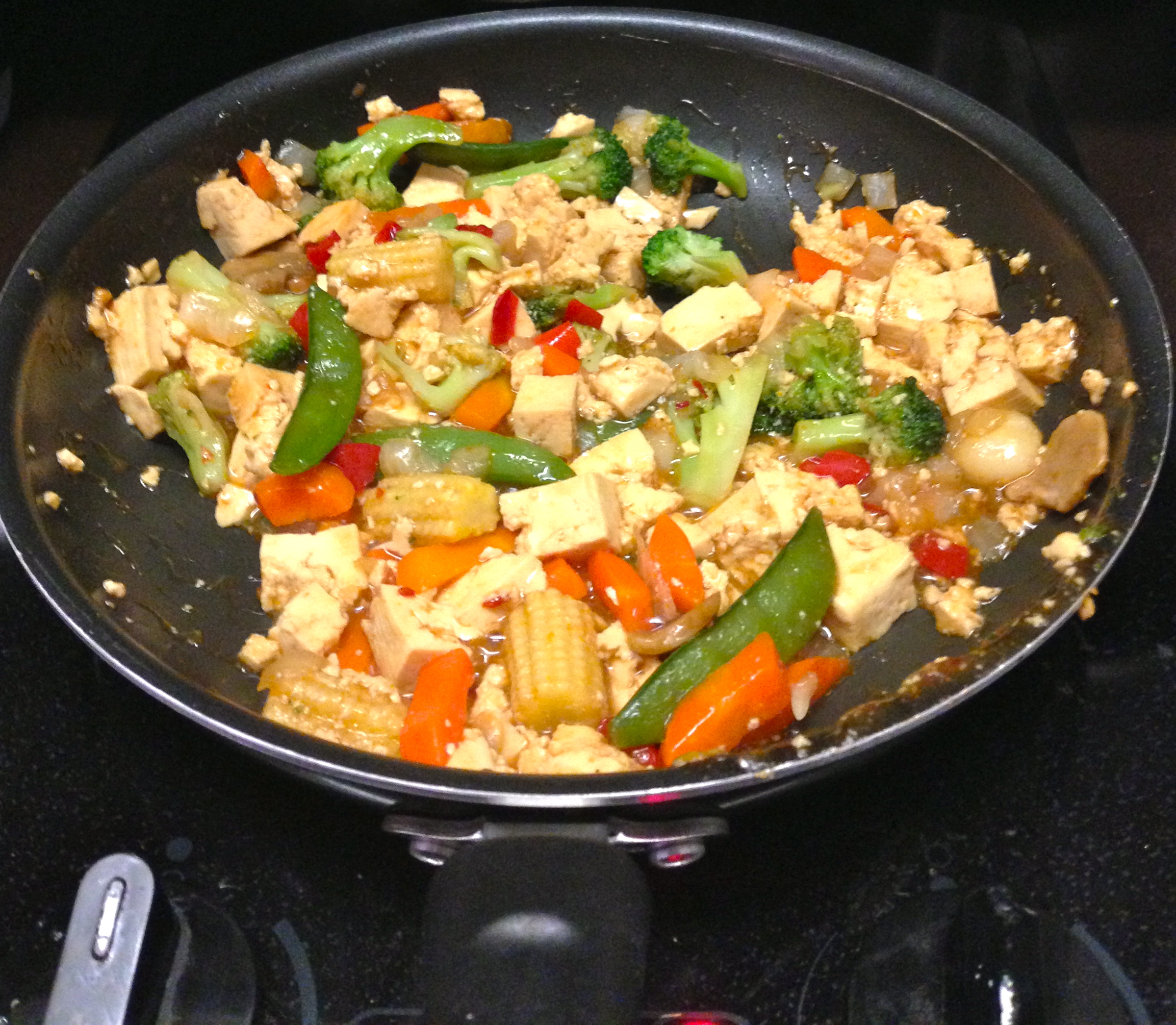
Tofu and Veggie Stir-Fry with Brown Rice

IMG_0226

Why order in greasy food when you can cook your own stir-fry with only ingredients you know are wholesome? This stir-fry can be made with any lean protein  – I’ve replaced the tofu with shrimp before, as well as chicken, and it’s always been amazing and authentic tasting. Also, depending on which veggies I find at the farmer’s market or grocery stores, I’ve switched up the components of this dish to reflect seasonality and local offerings when possible. This healthy stir-fry will fill you up with fiber and protein and give you a hearty dose of antioxidants. Wok not included!

Ingredients (serves 2):

8 oz extra firm tofu

1/2 C sugar snap peas

1 C broccoli florets

2 baby bok choy

1/2 onion, diced

2 large carrots, sliced

1 C mushrooms, sliced

1 C brown rice

1/4 C corn (off the cob – I like to buy frozen corn!)

1 Tbsp olive oil or canola oil

1/4 C low-sodium soy sauce (or you can try a different stir-fry sauce – just try to avoid products with ingredients such as caramel color and high fructose corn syrup!)

This time I used baby corn!

This time I used baby corn!

Directions:

1. Steam carrots in microwave until soft (approximately 5 minutes).

2. Steam broccoli florets in microwave for 1 minute and 30 seconds.

3. Steam corn in microwave for 45 seconds.

4. Cook brown rice according to directions on package (I find it easiest to buy fully cooked frozen brown rice and steam it in the microwave).

5. Drain excess water from tofu and gently squeeze dry with a paper towel. Cut into small cubes.

6. Pour oil and half the soy sauce (about 2 Tbsp) into skillet and warm over medium heat.

7. Place onion and mushrooms in skillet and cook for 5 minutes, stirring occasionally.

8. Slice bok choy into large pieces and add to skillet.

9. Wash sugar snap peas and pat dry. Add steamed carrots, corn and broccoli to skillet. Add tofu and sugar snap peas. Add remaining soy sauce and cook for another 5 minutes, stirring occasionally.

10. Place brown rice on plate and pour mixture over rice. Serve hot and enjoy!

the Goods: What’s Inside?

Nutritional Analysis Per Serving:

Calories 377 calories, Total Fat 15 g, Saturated Fat 2 g, Cholesterol 0 mg, Carbohydrates 46 g, Fiber 9 g, Protein 19 g, Calcium 194 mg, Sodium 739 mg

Cauliflower Power

cauliflower200-73fa7e31835d86c2f092faa660cc370112350a0f-s6-c30Why Eat Cauliflower?

Cauliflower is a member of the cruciferous vegetable family and  therefore joins the likes of Brussels sprouts, cabbage, broccoli, bok choy and other veggie powerhouses. Even though these veggies are personal favorites of mine, many people seem to dislike this veggie family, even though they have powerful antioxidant properties. So, I have made it my mission to create tasty recipes that incorporate these vegetable superheroes in an effort to spread the love – and the deliciousness. Cauliflower can grow in cool temperatures and therefore can be a staple throughout the fall and winter months at farmer’s markets and seasonal markets. So, next time you’re at your local market, give cauliflower a chance!

What Do I Do With Cauliflower?

Cauliflower is an easy vegetable to begin your cruciferous vegetable tasting, since it can actually be prepared to taste just like an all-time favorite: potatoes! Lower in calories and carbohydrates, but similar in consistency, this alternative can be swapped into many potato recipes! The two recipes below are kid-friendly ways to introduce your family (or anyone) to cauliflower – I promise you won’t even have leftovers!

Recipe #1: Cauliflower Breadsticks

yum!

yum!

I adapted this recipe that was given to me by a friend and slimmed down traditional cheese sticks. All of the flavor for less than 50 calories per “bread”stick? That is true cauliflower power!

Ingredients (serves 12):

1 large head cauliflower (approximately 6” diameter)

2 cloves garlic, minced

2 large eggs, lightly beaten

3 oz low-fat shredded mozzarella cheese

½ tsp onion powder

Dash salt

¼ tsp ground black pepper

Non-fat vegetable oil cooking spray

Directions:

  1. Preheat oven to 450 degrees Fahrenheit.
  2. Wash and dry cauliflower and chop into florets. Steam (either in microwave or over boiling water) until soft (approximately 10-15 minutes).
  3. Place cauliflower in food processor and blend until pureed. The cauliflower should have the consistency of mashed potatoes.
  4. In a large bowl, mix eggs, 2 oz cheese (2/3 of the cheese), spices (garlic, onion powder, salt and pepper) and pureed cauliflower.
  5. Spray a 9×13 inch casserole dish with non-stick vegetable oil cooking spray. Transfer cauliflower mix into casserole dish and spread into a thin, even layer with spatula.
  6. Bake in oven for approximately 20-25 minutes, or until the top is slightly brown. Remove from oven, add remaining cheese on top and bake until cheese is melted (another 5 minutes).
  7. Cut into squares (3×4) to yield 12 cauliflower breadstick squares. Enjoy!

The Goods: What’s Inside?

Nutritional Analysis Per Serving:

*1 serving is 1 square

Calories 43, Total Fat 2 g, Saturated Fat 1 g, Cholesterol 36 mg, Carbohydrates 3 g, Fiber 1 g, Protein 4 g, Calcium 72 mg, Sodium 86 mg

Recipe #2: Cauliflower Mashed “Potatoes”

just like mashed potatoes!

just like mashed potatoes!

This recipe is a true favorite of mine – so easy to prepare and tastes just like your favorite comfort food – only take even more comfort in the fact that it contains less saturated fat, less carbohydrates and fewer calories than the traditional potato version with cream.

Ingredients (serves 4):

1 large head cauliflower (approximately 6” in diameter)

1 clove garlic, minced

1 Tbsp butter or margarine

¼ tsp ground black pepper

¼ tsp salt

Directions:

  1. Bring a medium-sized pot of water to a boil.
  2. Wash and dry cauliflower. Cut cauliflower into florets and transfer into pot of boiling water. Boil until soft (approximately 5-7 minutes).
  3. Strain water from cauliflower and transfer cauliflower into food processor. Blend until pureed (it should be the consistency of mashed potatoes).
  4. Transfer cauliflower into serving bowl. Add butter and spices and stir until well combined. Enjoy!

The Goods: What’s Inside?

Nutritional Analysis Per Serving:

Calories 63, Total Fat 12 g, Saturated Fat 2g, Cholesterol 8 mg, Carbohydrates 8 g, Fiber 4 g, Protein 3 g, Calcium 35 mg, Sodium 210 mg

*raw cauliflower photo courtesy of: http://media.npr.org/kitchen/2008/04/cauliflower/cauliflower200-73fa7e31835d86c2f092faa660cc370112350a0f-s6-c30.jpg 

Ever Wonder How The French Stay So Thin? They Eat This!

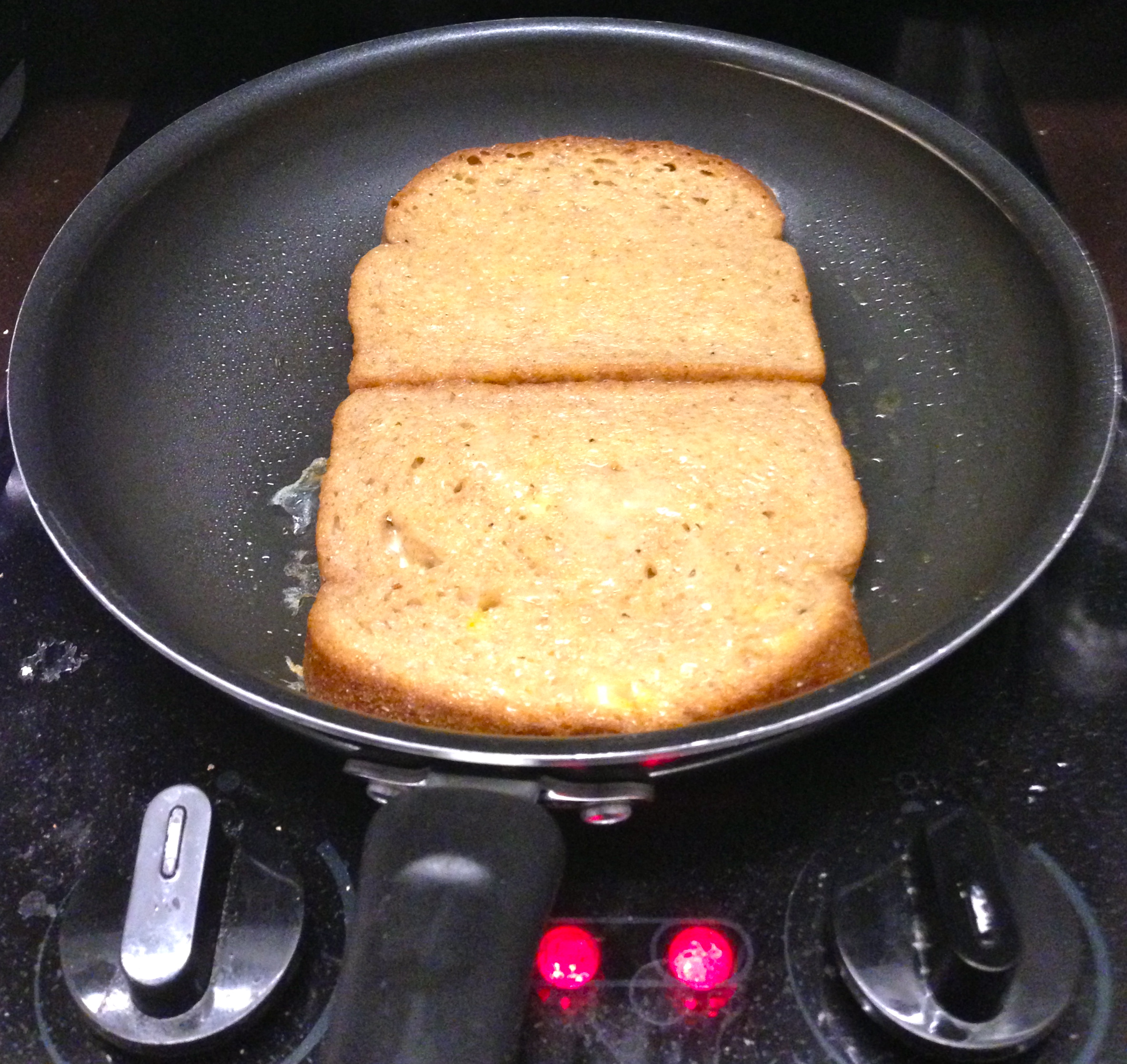
French Toast with Strawberries, Cinnamon and Maple Syrup

Okay, maybe not. But this slimmed down French toast is pumped up with extra nutrition and skimps on fat, so you can enjoy this childhood favorite. This recipe uses whole wheat toast and one egg with one egg white, so you can fuel up with fiber and protein. Also, some studies suggest that eating cinnamon with bread may help to maintain blood glucose levels and prevent a spike in blood sugar. Plus, it’s delicious!

IMG_0587

Ingredients (serves 1):

2 slices whole wheat bread (I like Vermont Bread Company Soft Whole Wheat)

1 large egg, 1 large egg white

Splash of skim milk (about 1 Tbsp)

4 medium strawberries

3/4 tsp cinnamon

1 tsp butter

nonstick vegetable oil cooking spray

1 Tbsp maple syrup

dash ground black pepper

dash salt

almost ready to flip!

almost ready to flip!

Directions:

1. Spray medium sized pan with nonstick vegetable cooking spray and warm over medium heat.

2. Crack 1 egg into bowl. Crack second egg and separate the egg white by transferring the yolk back and forth between the two halves of the egg shell, allowing the egg white to fall into the bowl below. Discard shells and one remaining yolk (*note: you can also buy a carton of egg whites and use the equivalent of 1 large egg).

3. Add splash of milk (about 1 Tbsp) to eggs. Add salt and pepper and scramble well with fork.

4. Soak each piece of bread in the egg mixture (coating well) and transfer to pan.

5. Cook bread about 7-10 minutes on each side, until French toast becomes golden brown and egg is cooked thoroughly. Transfer to plate. Top with butter, cinnamon, strawberries and maple syrup. Enjoy!

The Goods: What’s Inside?

Nutritional Analysis Per Serving:

Calories 300, Total Fat 9 g, Saturated Fat 4 g, Cholesterol 196 mg, Carbohydrates 42 g, Fiber 4 g, Protein 14 g, Sodium 729 mg, Calcium 114 mg

Green Eggs, No Ham

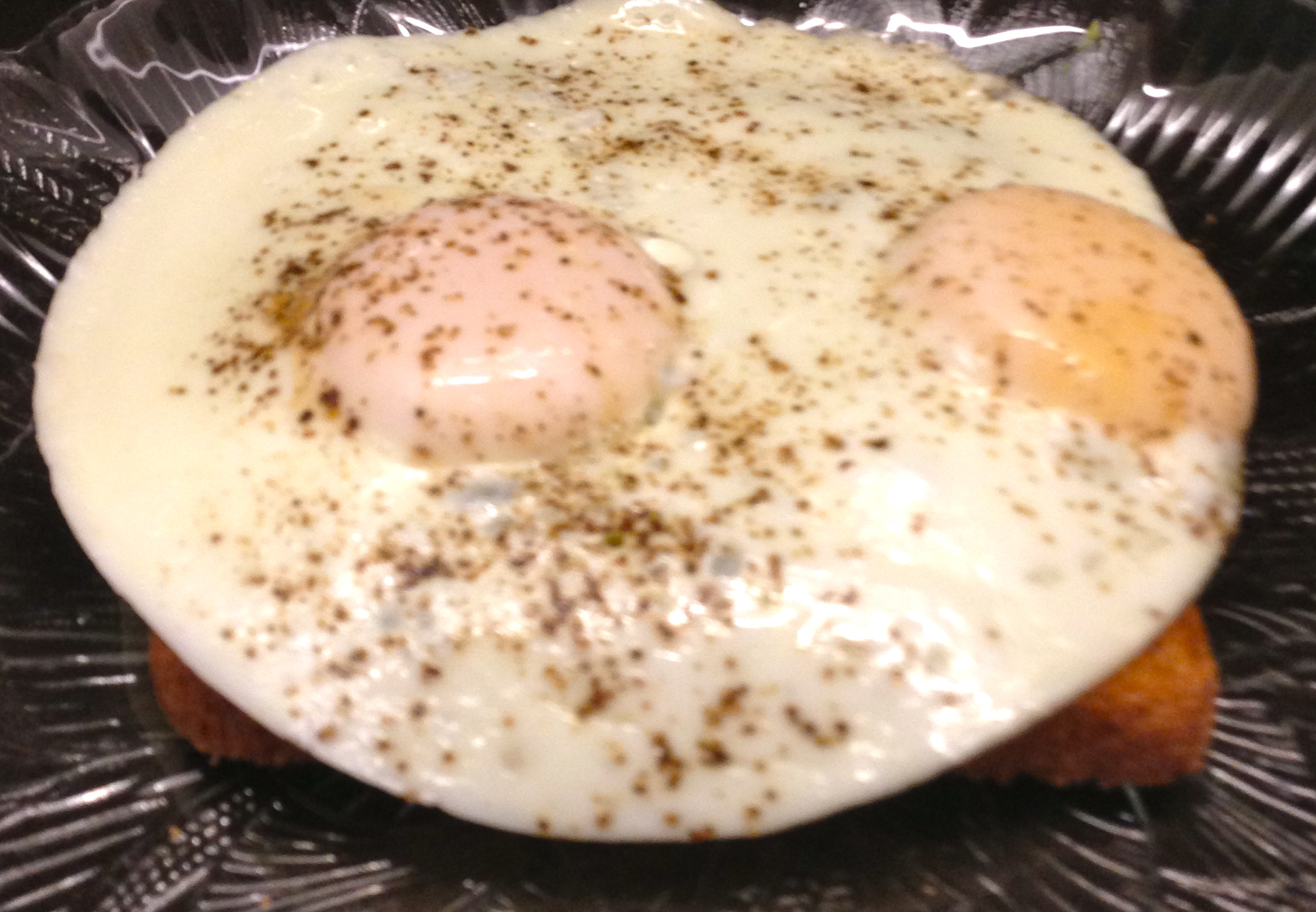
Sunny Side Up Eggs with Avocado on Toast

This easy breakfast is filling, delicious and offers protein, healthy monounsaturated fat and fiber, along with vitamins and minerals such as vitamin K, folate and potassium. I know the morning can be rough, but this breakfast takes about 10 minutes to make and will keep you full for hours, without compromising your calories.

IMG_0576

Ingredients (serves 1):

2 large eggs

1/4 avocado

1 slice whole wheat bread

Nonstick vegetable oil cooking spray

dash salt

dash ground black pepper

mashed avocado on toast (also amazing on its own!)

mashed avocado on toast (also amazing on its own!)

Directions:

1. Spray small pan with nonstick vegetable oil cooking spray. Warm over medium heat.

2.Slice avocado in half and slice one half in half again. Remove fruit from skin and transfer to small bowl. Mash with fork. (*Note: If you save the half with the pit, the avocado will not brown as fast. Store in refrigerator in air tight plastic bag for 1-2 days)

3. Place bread in toaster and warm until toasted and golden brown (about 5 minutes).

4. Crack eggs into pan (or into bowl first, if you prefer, and transfer into pan), add salt and pepper and cover. Cook until white is solid but yolk is still somewhat liquid (about 5 minutes). There should be a fine white film over the yolk.

5. Remove toast from toaster and transfer avocado on top of toast, spreading evenly in a thin layer. Add egg on top once cooked. Serve hot and enjoy!

The Goods: What’s Inside?

Nutritional Analysis Per Serving:

Calories 323 calories, Total Fat 17 g, Saturated Fat 4 g, Cholesterol 372 mg, Carbohydrates 27 g, Fiber 5 g, Protein 17 g, Sodium 711 mg, Calcium 82 mg

*Note: This nutritional analysis includes a bread that is not low sodium and also a dash of table salt. Salt content may vary.

ready to eat!

ready to eat!

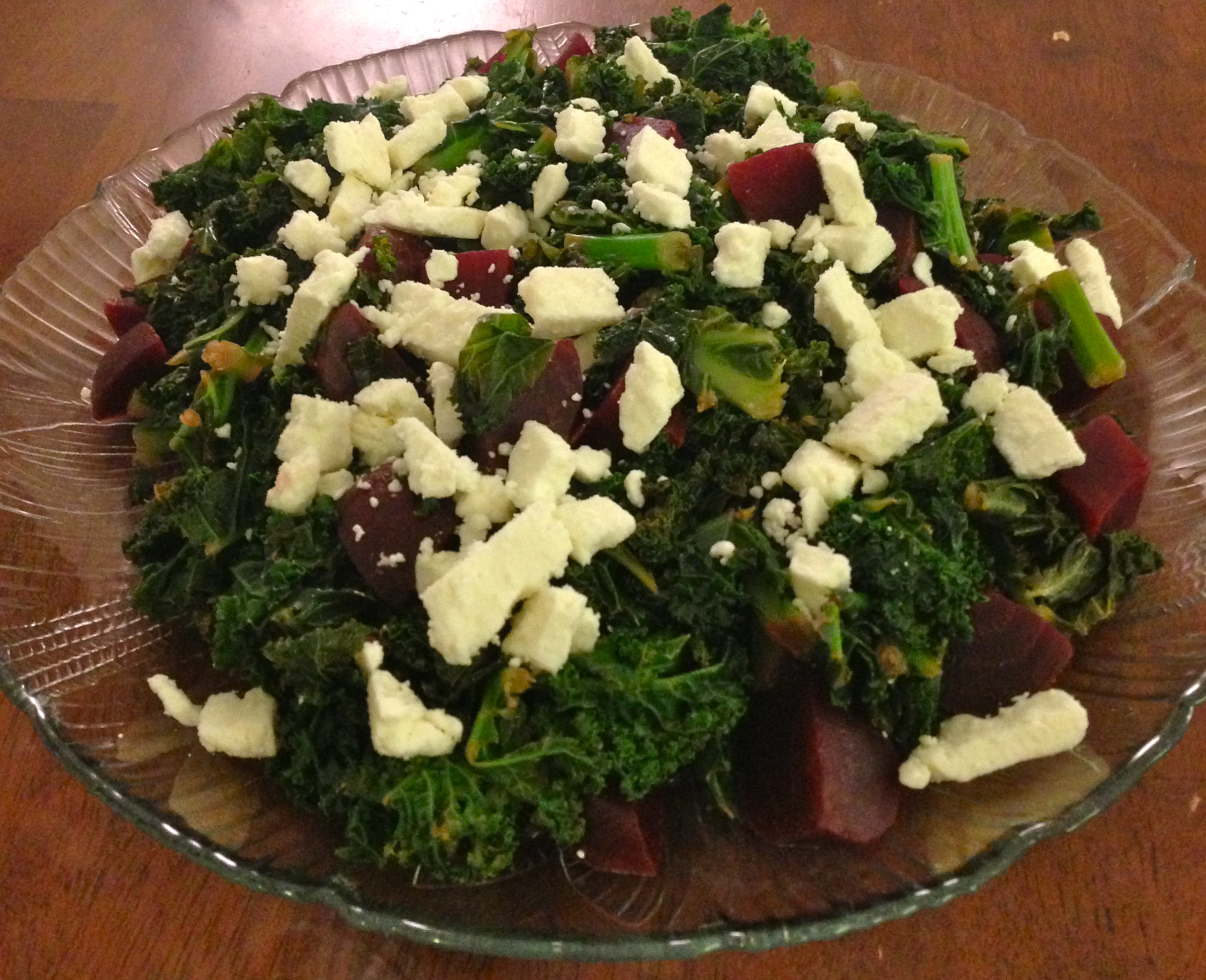
Warm Kale, Beet and Feta Salad

Warm Kale, Beet and Feta Salad

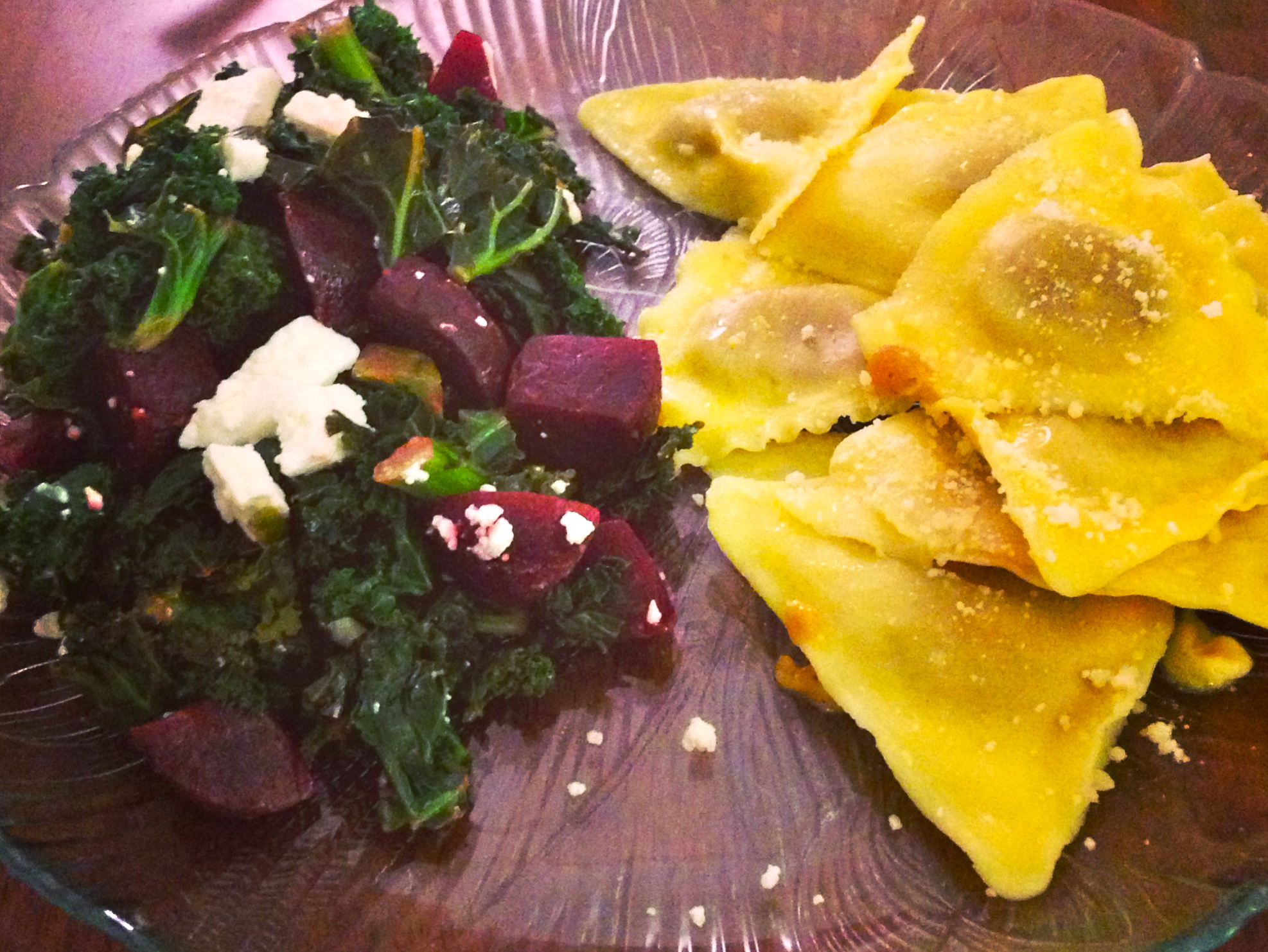
This seasonal salad is packed with vitamins and minerals and will keep you warm in these chilly temperatures. Beets and kale are both vegetables that can be grown through the winter and bought at local farmer’s markets and grocery stores during this time when vegetables can seem scarce. The hearty, crisp taste of kale is balanced by the sweet taste of beets and creamy feta cheese in this warm salad, which is a cinch to make. As tasty as it is pretty, this winter-y salad will become your new favorite for entertaining – or just eating on your own!

IMG_0569

Ingredients (serves 4):

6 C kale, raw, chopped (wash thoroughly and remove large stems)

8 oz. baby beets (I like Melissa’s Ready-To-Eat Baby Beets, which are steamed, peeled and ready to eat. 1 package is 8 oz, which is about 5 baby beets. You can also roast your own beets! If you roast your own, you should do so before preparing this dish, as they should be ready to eat in this recipe).

1/4 C reduced- fat feta cheese, crumbledIMG_0567

1.5 Tbsp extra virgin olive oil

Lemon juice from 1/2 a lemon, freshly squeezed

1/8 tsp salt

1/8 tsp ground black pepper

1/2 C water

Directions:

1. Heat olive oil in large pan over medium heat (I recommend using a pan with large sides, or a pot, as the kale starts out piled high in the pan before it cooks down).IMG_0566

2. Add kale to pan. Add water and cover. Allow kale to cook covered for approximately 5 minutes. The kale should be a bright green color and there should be some excess liquid when the cover is removed.

3. Remove cover and stir kale until it begins to wilt, about 3 minutes. The liquid should be mostly evaporated by now. Add lemon juice, salt and pepper and cook another 2-3 minutes, stirring occasionally.

4. Cut beets into wedges and add to kale. Cook 2-3 minutes, stirring occasionally. Transfer from pan to serving dish. Top with feta cheese and serve warm. Enjoy!

The Goods: What’s Inside?

Nutritional Analysis Per Serving:

Calories 149 calories, Fat 8 g, Saturated Fat 2 g, Cholesterol 6 mg, Carbohydrates 18 g, Fiber 4 g, Protein 6 g, Sodium 235 mg, Calcium 176 mg

I served it with butternut squash ravioli!

I served it with butternut squash ravioli!

A Healthy Tuna Salad

Tuna Salad

This healthy take on a tuna salad replaces mayonnaise with olive oil and lemon juice, which cuts the fat content of this dish, adds healthy monounsaturated fat, and gives the tuna salad a lighter taste. Ideal for taking to work or eating right at home, this healthy lunch gives you protein, fiber, vitamins and minerals so you can be strong, focused and satiated!

IMG_0546

Ingredients (serves 1):

1 can (about 4 oz) solid white albacore tuna, packed in water (I like Trader Joe’s Half Salt tuna)

juice from 1/2 lemon (fresh squeezed is best!)

2 Tbsp extra virgin olive oil, divided

2 C spinach

6 cherry tomatoes, halved

1/2 red bell pepper, chopped

1/4 C sliced cucumber

2 Tbsp onion, chopped

1 Tbsp red wine vinegar

a lighter tuna salad! dressed with extra virgin olive oil and lemon juice - hold the mayo!

a lighter tuna salad! dressed with extra virgin olive oil and lemon juice – hold the mayo!

Directions:

1. Drain water from tuna and pat dry with paper towel. transfer tuna to small bowl.

2. Add 1 Tbsp olive oil and lemon juice to tuna and mix well with fork. Set aside.

3. Place spinach on plate (or in bowl). Add tomatoes, onion, cucumber slices and chopped bell pepper. Add tuna on top. Dress with remaining 1 Tbsp olive oil and red wine vinegar. Enjoy!

The Goods: What’s Inside?

Nutritional Analysis Per Serving:

Calories 436 calories, Total Fat 32 g, Saturated Fat 5 g, Cholesterol 51 mg, Carbohydrate 16 g, Fiber 5 g, Protein 28 g, Sodium 421 mg, Calcium 86 mg

Baked Chicken Parmesan

Baked Chicken Parmesan

In these chilly temperatures, I’m craving comfort food. However, I don’t want to eat food that isn’t healthful – I just want to eat a warm, hearty meal. This chicken parmesan is baked, instead of being pan fried, and uses olive oil instead of egg to glue the breadcrumbs to the chicken. And did I mention the breadcrumbs are whole wheat? If you have thirty minutes, you have time to make this amazing twist on a traditional comfort dish.

IMG_0549

Ingredients (serves 2):

2 chicken breasts, approximately 8-10 oz. (I like using thin sliced chicken breasts)

2 cloves garlic, minced

2 Tbsp extra virgin olive oil

1 C marinara sauce (I like Classico Marinara with Plum Tomatoes)

1/3 C whole wheat breadcrumbs, seasoned (or use plain whole wheat breadcrumbs and season them yourself with garlic powder, salt and pepper)

1/3 C shredded part-skim mozzarella cheese

nonstick vegetable oil cooking spray

IMG_0547Directions:

1. Preheat oven to 365 degrees Fahrenheit

2. Warm olive oil and minced garlic in small pan over medium heat (approximately 3-4 minutes).

3. Spray casserole dish with nonstick vegetable oil cooking spray (light coating)

4. Place breadcrumbs in bowl. Set aside. Place chicken breast in skillet, one piece at a time, and coat both sides with garlic and olive oil (be careful – the pan is hot!!!). Transfer chicken breast to bowl with breadcrumbs and coat. Place chicken breast in casserole dish.

5. Bake chicken in preheated oven for 20-25 minutes (the chicken should reach an internal temperature of 165 degrees Fahrenheit)

6. Remove chicken from oven. Add sauce and cheese and bake chicken for another 5-10 minutes, until cheese is melted.  Enjoy!

The Goods: What’s Inside?

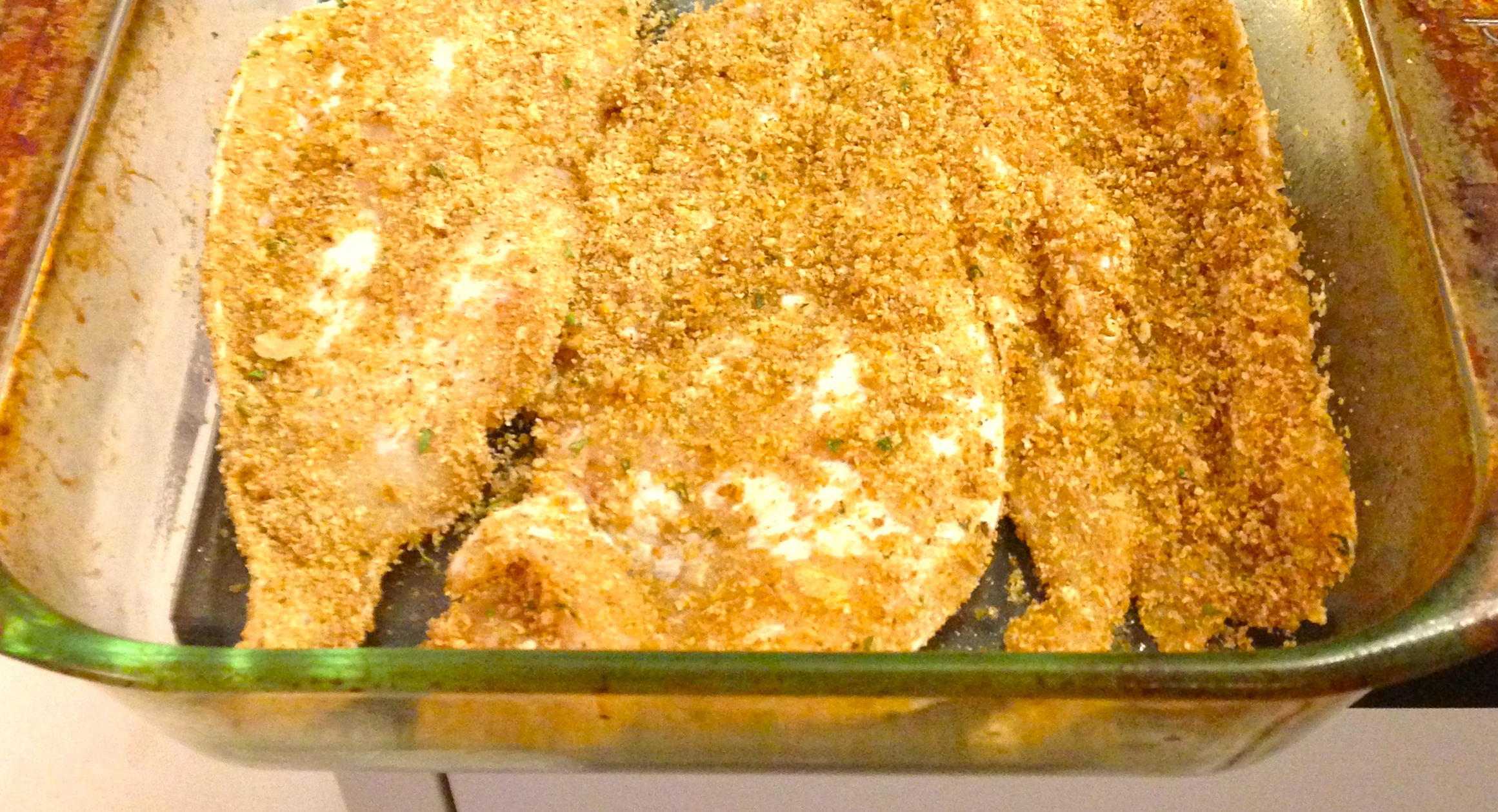
ready to be baked in the oven!

ready to be baked in the oven!

Nutritional Analysis Per Serving (1 serving is one chicken breast with half of the ingredients listed above)

Calories 489, Total Fat 25 g, Saturated Fat 6 g, Cholesterol 106 mg, Carbohydrate 22 g, Fiber 4 g, Protein 45 g, Sodium 962 mg, Calcium 245 mg


New Year, New Way To Think About Your Resolutions!

So it is three days into the New Year, which means it is the perfect time to re-evaluate those perennial New Year’s resolutions. Chances are, they look something like this: 1) go to the gym 6-7 days/week 2) cut out all junk food 3) lose weight. While it is certainly encouraged to have goals and make New Year’s resolutions, it is important that these goals are both attainable and sustainable. If you are new to working out and have previously worked out less than 1-2 times per week until 2014, chances are it is not going to be enjoyable or realistic to be hitting the gym 6-7 days per week. Also, cutting out all junk food is quite ambitious and, frankly, sets up unhealthy relationships with food. Food is meant to fuel your body and be enjoyed and it is important to understand that it is not the end of the world if you eat a cookie, as long as your diet is generally comprised of real, whole foods and offers your body the nutrition it needs to keep you moving, happy and healthy. So here are my guidelines to making  New Year’s resolutions that will stick.
runningshoes

1. Start Small

Be proud of your small accomplishments – they add up. Small lifestyle modifications = large results. For instance, weight loss is a result (not a behavior). It is often best to set behavioral goals and ultimately, these behavioral goals can add up big time to give you the results you want. Possible behavioral goals include things like taking the stairs when possible, getting off at an earlier subway stop in order to walk further, walking instead of driving or taking public transportation, eat 3 more servings of vegetables each day, eat breakfast each morning, etc. These all seem small, but they are behaviors that are part of a healthy lifestyle and will ultimately help you to reach your overarching goal of weight loss, weight maintenance, being more active, or whatever your personal goal is.

2. Don’t Make Too Manyweights

I bet all of those behaviors I listed above are enticing. However, if you do not currently do any of those things, attempting to start doing all of those is likely to be a set-up for failure. Making too many resolutions and goals at once can be overwhelming and ultimately, you will be less likely to do any of them. It is often better to pick just a couple of goals (I suggest starting with 1-3) and once these become routine, gradually add in more goals (who says you can only make goals on January 1st???) We are constantly evolving and should always be challenging ourselves and our goals should reflect this. So, allow yourself to start small, with just a few behaviors and allow yourself and your lifestyle to evolve gradually. Trust me, you will be much happier, healthier, and sane!

3. Keep Your Resolutions Realistic

Now is the perfect time for self reflection. You must meet yourself where you are in order to get where you would like to go. Currently going to the gym two times per week? Awesome! A perfect resolution would be to go to the gym 3-4 times per week, or to gradually add time doing cardio work, or gradually add more challenging workouts (such as planks and their many variations). Another great resolution would be to go to the gym at least two times a week (as you have been doing) and add in more activities of daily living, such as physical work (walking, taking the stairs, doing yardwork/housework, etc.) Or, my personal favorite, add in mini-workouts that do not include the gym or any equipment. Can’t stop watching your favorite show? Do mat exercises, such as crunches, squats, planks and push-ups during commercials. There, no sweat! (Well, a little sweat, but so easy to squeeze in!!!) While it would be awesome to tell yourself you are all of the sudden going to start going to the gym 4-5 times more per week than you already are, this is likely not realistic and not sustainable. Accept yourself, love yourself, and challenge yourself with realistic goals. That is how you will become stronger and reach your goals.

4. Do not (I repeat – DO NOT) focus on numbers

scaleSo many clients and friends talk to me about the scale. So many people base their success off of a number reported by the scale. Yes, the scale reports your weight, but this number can be affected by so many factors and neglects a lot of other valuable information. For instance, your weight could be influenced by water, muscle mass, and many other factors. Your weight is not simply a report of fat and when you lose weight, you are losing not just fat but also fat free mass (which is your lean body mass). Therefore, rapid weight loss can mean dehydration and rapid loss of muscle, which is likely not what you are aiming for! Additionally, the scale does NOT report the positive changes going on inside your body, such as the relative shift in  fat free mass versus fat mass, neural adaptations that occur with exercise regimens, etc. I always tell clients and friends to focus on fitness goals – these are the only numbers you should be focusing on! For instance, shaving off time from your pace per mile, adding time to your plank, adding weight to your resistance training – these are the numbers that are okay to focus on. Your weight? It is likely to fluctuate, plateau at some point, and drive you absolutely crazy! Focus on your performance and how you feel – the resulting weight (loss, maintenance, gain) will come as a result of these behaviors.

Hopefully this year, these new New Year’s resolutions will stick and inspire you to continue to be active, healthy and respectful of your body. It does a lot for you and a great overall goal would be to treat it well, in any way that you can!

Wishing everyone a happy, healthy new year!

*sneaker photo courtesy of http://teambcspca.files.wordpress.com/2011/05/runningshoes.jpg

*weight photo courtesy of http://www.hitraveltales.com/wp-content/uploads/2011/04/weights.jpg

*scale photo courtesy of http://blog.withings.com/wp-content/uploads/2012/10/7-Wireless_Scale_Lifestyle_1.jpg

Quinoa with Lentils and Veggies

Quinoa with Lentils and Veggies

This dish is packed with protein and fiber, so you can feel full while loading up on some plant-based foods, like veggies, lentils and grains. Using zucchini, bell pepper, spinach, mushrooms, onions and garlic, this staple packs in flavor, along with a ton of vitamins and minerals. Also, this dish is amazing to have as leftovers – serve it hot the first time and then serve it cold days later with some crumbled feta cheese. Craving some extra protein? I’ve also made this dish using tofu in combination with the lentils, for a heartier meal.

shown with tofu

shown with tofu

Ingredients (serves 5):

1 C quinoa, uncooked

3/4 C lentils, cooked (I like to use lentils that are pre-cooked and vacuum packed. These usually just require 2 minutes in the microwave, or can even be eaten out of the package, cold – just watch out for the sodium content!)

1 medium zucchini squash

1 red bell pepper

2 C spinach, raw

1 small onion (about 1 C chopped)

2 C mushrooms, sliced

2 cloves garlic

1/8 tsp ground black pepper

dash salt (depending on how much salt you prefer)

dash cayenne pepper

1/8 tsp garlic powder

1 Tbsp butter (or Smart Balance or other butter alternative)

1.5 Tbsp olive oil

I added yellow squash this time!

I added yellow squash this time!

Directions:

1. Cook quinoa according to instructions on box (*note: you may choose to replace the water with low-sodium vegetable broth, which also tastes really good! If you do this, you do not need to add the 1 Tbsp butter – this is used to enhance the flavor when the quinoa is cooked with water)

2. Warm olive oil in large saucepan over medium heat.

3. Chop onion, bell pepper, mushrooms and mince garlic. Add onion to saucepan and cook for 2 minutes. Add bell pepper, mushrooms and spices (black pepper, salt, cayenne and garlic powder) and cook another 8-10 minutes. Add garlic.

4. Microwave lentils in microwave-safe bowl according to directions -usually about 2-4 minutes. (*note if you are soaking your own lentils you can omit this step).

5. Add spinach and sauté  until wilted, about 2-3 minutes. Add cooked quinoa and lentils to saucepan and cook another 2-3 minutes. Serve hot (or chill in the refrigerator and serve cold!)

IMG_0100

The Goods: What’s Inside?

Nutritional Analysis Per Serving

Calories 320, Fat 8 g, Saturated Fat 1 g, Cholesterol 0 mg, Carbohydrates 51 g, Fiber 12 g, Protein 13 g, Calcium 42, Sodium 70 mg

me leftover lunch - served cold with feta!

my leftover lunch – served cold with feta!